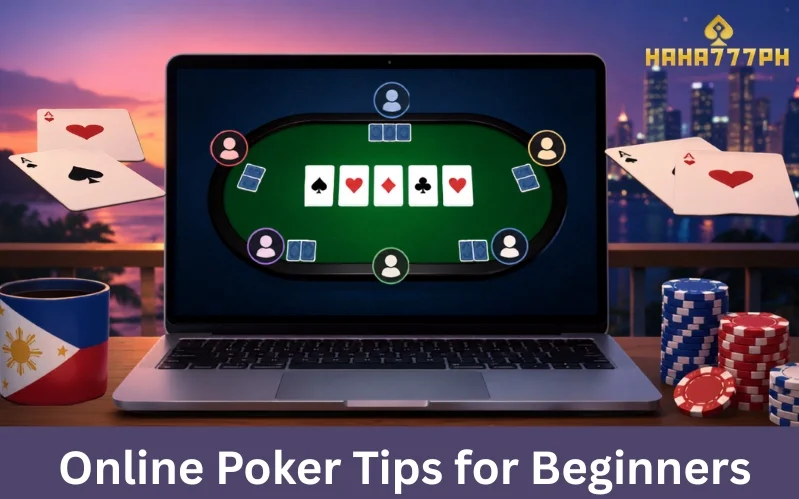
Poker is one of those games that looks simple from the outside until you sit down at a table and realize how much is actually going on. Unlike slots or roulette, poker is not purely a game of chance. Every hand you play involves a decision. Every bet tells a story. And every session teaches you something, whether you win or lose.
If you are new to the game and searching for online poker tips, the most honest thing anyone can tell you is this: no strategy guarantees a win. But the right approach will help you make smarter decisions, protect your money, and enjoy the game without unnecessary regret. This guide is written for beginners in the Philippines who want to understand online poker with a safer and more practical mindset. Platforms like Haha777 PH offer a space for players to explore poker, and the experience becomes far more rewarding when you walk in prepared.
Let’s break down the fundamentals step by step, without the fluff.
Learn Poker Hand Rankings Before You Play
Before you place a single chip, you need to know which hands beat which. This sounds obvious, but a surprising number of beginners skip this step and pay for it at the table. Learning poker hand rankings for beginners is one of the first steps toward making better decisions.
Here is a quick rundown from strongest to weakest:
- Royal Flush — A, K, Q, J, 10 of the same suit
- Straight Flush — Five consecutive cards of the same suit
- Four of a Kind — Four cards of the same rank
- Full House — Three of a kind plus a pair
- Flush — Five cards of the same suit, any order
- Straight — Five consecutive cards, any suit
- Three of a Kind — Three cards of the same rank
- Two Pair — Two different pairs
- One Pair — Two cards of the same rank
- High Card — When nothing else connects
When you understand poker hand rankings deeply, you stop overvaluing weak hands. You can fold faster, avoid bad calls, and make smarter bets throughout the game. Beginners who skip this foundation often chase hands they were never going to win.
Start With Low-Stakes Tables
There is no shame in starting small. In fact, it is one of the smartest poker tips for beginners that experienced players consistently recommend.
Low-stakes tables slow everything down. You get the chance to observe how betting rounds unfold, how experienced players move, and how the pressure shifts depending on position and chip stacks. You are not fighting for survival; you are studying.
High-stakes tables, on the other hand, attract experienced players who will punish every mistake. If you are still learning how to read the board or manage your chips, that environment will drain your bankroll before you pick up anything useful.
Start low. Learn the rhythm. Then move up when you feel genuinely ready, not just impatient. Beginners exploring online poker should focus on practice, patience, and control before considering bigger tables.
Choose Your Starting Hands Wisely
One of the most common mistakes beginners make is playing too many hands. When you are dealt cards, the natural impulse is to find a reason to stay in. Resist that impulse.
Not every hand deserves your money. In Texas Hold’em, your starting hand is the foundation of everything that follows. A shaky foundation rarely leads to a strong outcome. This is why a basic poker starting hands guide can help new players avoid weak decisions early.
Premium hands worth playing aggressively: A-A, K-K, Q-Q, A-K suited
Strong hands worth playing in most positions: A-Q, J-J, 10-10, K-Q suited
Hands to be careful with: Low suited connectors, weak off-suit cards, hands that look possible but rarely hit
A useful rule of thumb: if your hand is weak before the flop, it usually becomes harder to win after the flop, not easier. Beginners who adopt a tighter starting hand strategy win more often than those who play every card they’re dealt.
Understand Online Poker Position Strategy
Where you sit relative to the virtual dealer button matters more than most beginners realize. This is one of those online poker tips that separates casual players from thoughtful ones.
In online poker, position refers to the order in which you act during a betting round. Good poker position strategy helps you decide when to bet, call, raise, or fold based on how much information you have.
Early position means you act before most other players. You have limited information about what others may do, so it is better to play tighter here and only enter pots with stronger hands.
Late position means you act after most others. By the time it is your turn, you have already seen how several players responded to the cards. That information is valuable. You can make more informed decisions about whether to bet, call, or fold.
If you are last to act and everyone checks to you, you may choose to bet and put pressure on the table. If several players before you raised aggressively, that tells you something too. The late position is where much of online poker strategy actually happens.
Know When to Fold — And Do It Without Guilt
Folding is not losing. This mindset shift takes time for most beginners to make, but it is one of the most important.
Good poker players fold frequently. They fold when the board looks dangerous for their hand. They fold when the cost of staying in outweighs the potential reward. They fold when a strong opponent keeps raising, and the math simply does not support calling. Knowing when to fold in poker can protect your bankroll and prevent one bad hand from turning into a bigger loss.
Here is what to watch for:
- The board has connected cards that suggest straights or flushes your opponent may have hit
- The bet sizes are becoming too expensive relative to what you could win
- You are drawing to a weak hand with poor odds
- Something about the betting pattern feels off
Winning online casino poker games is not about playing every hand. It is about choosing the right moments to act and recognizing the wrong ones before they cost you.
Use Bluffing Carefully, Not Constantly
Bluffing is part of poker — but it is one of the most misunderstood parts, especially for beginners.
A bluff works when your opponent believes you have a strong hand and folds accordingly. That only happens when the conditions are right: your position supports the story you are telling, your opponent is actually capable of folding, and the board does not obviously contradict your betting pattern.
Bluffing every round makes you predictable. Bluffing against a player who calls almost everything is simply throwing money away. For beginners, the best poker bluffing tips are simple: bluff less, choose better spots, and never bluff just because you are frustrated.
If you are going to bluff as a beginner, consider semi-bluffing betting when you have a hand that is not strong yet but has real potential to improve. A flush draw or an open-ended straight draw gives you two ways to win: your opponent folds, or you hit your card. That is a much safer type of bluff than betting on air and hoping.
Manage Your Poker Bankroll Seriously
Bankroll management might be the least glamorous topic in real money online poker games, but it is the one that keeps players in the game long enough to actually improve.
Here is the core idea: set a budget before you play, and treat it as a hard limit. Good poker bankroll management means knowing how much you can afford to risk before the session begins, not after emotions take over.
Do not play with money you need for rent, groceries, or bills. Do not go back to your wallet after losing your session budget just because you feel close to turning things around. Do not increase your bet sizes to chase losses; that is one of the fastest ways to turn a manageable loss into a damaging one.
A practical approach is to divide your total poker budget into several sessions. If you have a small amount set aside for the month, spread it across multiple sessions rather than risking it all in one sitting. This gives you more time at the table, more hands to learn from, and more chances to practice.
Players at Haha777 PH benefit most from approaching the game with a clear budget and a calm mindset. Poker should never feel like financial pressure.
Avoid Tilt and Emotional Play
Tilt is what happens when frustration takes over your decision-making. You lose a big hand, feel the urge to win it back immediately, and start betting larger or calling when you should fold.
It is extremely common and extremely costly.
The antidote is simple in theory but harder in practice: take a break. Step away from the table after a rough session. Give yourself time to reset before playing again. Avoid logging in when you are angry, exhausted, or distracted; those are the moments when emotional bets replace rational ones.
Remember that one bad hand does not define a session, and one bad session does not define your skill. Online poker card games reward patience above almost everything else. Avoid chasing losses, keep your limits clear, and treat every session as a chance to learn rather than a chance to recover what you lost.
Watch How Your Opponents Play
In live poker, players read physical tells: nervous gestures, eye contact, how someone holds their cards. Online poker removes most of that, but it does not eliminate the ability to read opponents.
Pay attention to betting patterns. Who enters every pot? Who only raises when they have something? Who calls endlessly and who folds to pressure? Who seems to bluff often and who plays cautiously?
Over several hands, you start to build a picture of each player at your table. That picture helps you make better decisions. If a player who rarely bets suddenly raises big, that information means something. If someone who calls everything is suddenly quiet, that means something too.
Poker is as much about the people as it is about the cards. Learning how to read poker opponents online is not about guessing their exact hand. It is about noticing habits, timing, bet sizes, and repeated patterns.
Practice Before Moving to Bigger Games
There is no shortcut to improvement in poker online games. You get better by playing, reviewing your decisions, and being honest with yourself about where you went wrong.
After a session, think through the hands that stood out. Did you fold when you should have stayed? Did you stay when the signs were clearly pointing toward folding? Did you let position influence your decisions the way it should have?
New players on Haha777 Philippines should focus on mastering the basics before chasing higher-stakes tables. Moving up too quickly, before the fundamentals are solid, usually means learning the hard and expensive way.
The better approach is simple: practice hand selection, understand betting rounds, review mistakes, and increase risk only when your decision-making becomes more consistent.
Common Beginner Poker Mistakes to Avoid
Before we wrap up, here is a quick checklist of the habits that cost beginners the most:
- Playing too many starting hands
- Ignoring table position entirely
- Bluffing too often and without reason
- Chasing draws that are unlikely to hit
- Making emotional bets after a loss
- Playing without a set bankroll limit
- Believing every hand is winnable with the right attitude
- Copying advanced strategies before mastering the basics
- Moving to higher-stakes tables too early
- Treating poker like guaranteed income instead of entertainment
Avoiding these mistakes will do more for your game than any advanced tactic. Many beginners search for tips on winning at poker, but real progress often starts by removing habits that lead to unnecessary losses.
Final Thoughts
Poker improvement is a slow, steady process. The players who get better are not the ones chasing big wins from the start; they are the ones who commit to understanding the game, managing their bankroll responsibly, and making one good decision at a time.
Whether you are just getting started or coming back after a break, the advice stays the same: learn hand rankings, play tight from the start, respect your position, fold without guilt, and never risk more than you can genuinely afford to lose.
Haha777 PH is a platform where you can explore poker at your own pace. Make sure the pace you choose is built on patience, not pressure. For beginners in the Philippines, the smartest poker strategy is not about forcing wins. It is about learning the game carefully, managing risk, and playing responsibly.
Frequently Asked Questions
What are the best poker game tips for beginners?
Focus on hand rankings first; know which hands are strong before you sit at any table. From there, play tight starting hands, understand your position, manage your bankroll carefully, and fold without hesitation when the situation calls for it. Patience and discipline will take you further than any advanced technique.
Can beginners win at online poker games Philippines?
Yes, but it requires realistic expectations. Beginners can absolutely make good decisions and win hands. But neither a beginner nor a strategy guarantees consistent wins. The more you understand the game, the better your decisions become over time.
What is the best starting hand in poker?
In Texas Hold’em, pocket aces, also known as A-A, are usually considered the strongest starting hand. They give you a significant advantage before the flop, though how you play them after the flop still matters.
Should beginners bluff in online casino poker games?
Sparingly and with a clear reason. Bluffing randomly is not strategy; it is just risk. Beginners are better served by semi-bluffing when they have a drawing hand rather than bluffing on complete misses.
Why is bankroll management important in poker games online?
Because it keeps you in control, good bankroll management means you never risk more than you can afford to lose, you avoid chasing losses, and you give yourself enough sessions to actually improve. Without it, even skilled players can burn through funds quickly during a rough stretch.
Is online poker only luck?
No. Poker games include luck, but it also involves skill, patience, hand selection, position, bankroll control, and emotional discipline. You cannot control the cards, but you can control how you respond to them.